
TWO:[See larger version]
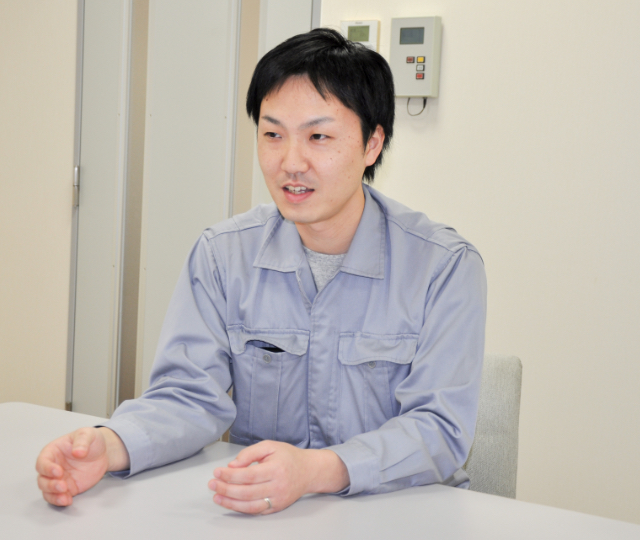
日本化学機械製造は、国内外に豊富な実績を持つプラントエンジニアリングとものづくりのプロフェッショナル集団です。
設計?製造?建設?メンテナンスまで自社一貫で担い、
顧客企業様の課題を解決するベストパートナーであるために日々前進し続けています。
オンリーワンの技術を武器に、私たちと一緒にあらゆる分野のプラントエンジニアリングに挑戦してみませんか。
- THREE:
- THREE:Two of the workmen from Butterley Foundry entered the "White Horse," which was kept by a widow Wightman, whose son George was deep in the foolish conspiracy into which Oliver and this his blind, savage tool, the Nottingham Captain, were leading him. They found Brandreth with a map before him, and telling them there was no good to be done, they must march up to London and overthrow the Government. He said all the country was rising; that at Nottingham the people had already taken the castle and seized the soldiers in their barracks, and were waiting for them. This shows that he had come straight from Oliver, who, on the 7th, was at Nottingham, attending the meeting there, and who knew that the meeting in Yorkshire had been prevented. Yet he had allowed the people of Nottingham to believe that the Yorkshire men were coming, according to agreement, in thousands; and he allowed Brandreth to go and arouse Derbyshire, under the belief that Nottingham that night would be in the hands of the insurgents. On Monday night, the 9th of June, Brandreth and a knot of his colleagues proceeded to muster their troop of insurgents for the march to Nottingham. They roused up the men in their cottages, and, if they refused to go, they broke in the doors with a crowbar, and compelled them to join them. Most of these unwilling levies slipped away in the dark on the first opportunity. At South Wingfield he assembled his forces in an old barn, and then they proceeded through the neighbourhood demanding men and guns. An old woman had the courage to tap the "captain" on the shoulder, and say¡ª"My lad, we have a magistrate here;" and many of the men thought Brandreth must be mad or drunk. At the farm of widow Hetherinton he demanded her men and arms, and when she stoutly refused him, he put the gun through[127] the window and shot one of her men dead. As the day dawned, Brandreth and his infatuated troop appeared before the gates of Butterley Foundry, and demanded the men; but Mr. Goodwin, the manager, had been apprised of their approach, and had closed the gates. Brandreth had planned to take Butterley Foundry, and carry away not only the men but a small cannon kept there; but Mr. Goodwin went out and told Brandreth he should not have a man for any such insane purpose, and seeing an old man that he well knew, Isaac Ludlam, who bore a good character, and had been a local preacher amongst the Methodists, he seized him by the collar and pushed him into the foundry court, telling him not to be a fool, but stay at home. Ludlam, however, replied, "he was as bad as he could be," rushed out, and went on¡ªto his death; for he was one of those that were executed.





TWO:Sir Robert Peel was sent for by the Queen. No difficulties were now raised about the Ladies of the Court, since the difficulty had been settled through the diplomacy of the Prince Consort and his well-intentioned, though pedantic, adviser, Baron Stockmar. In due time the following Administration was formed:¡ªFirst Lord of the Treasury, Sir Robert Peel; Lord Chancellor, Lord Lyndhurst; Chancellor of the Exchequer, Right Hon. H. Goulburn; President of the Council, Lord Wharncliffe; Privy Seal, Duke of Buckingham; Home Secretary, Sir J. Graham; Foreign Secretary, Earl of Aberdeen; Colonial Secretary, Lord Stanley; President of the Board of Control, Lord Ellenborough; President of the Board of Trade, Earl of Ripon; Secretary at War, Sir H. Hardinge; Treasurer of the Navy and Paymaster of the Forces, Sir E. Knatchbull. The Duke of Wellington was in the Cabinet without office. It was thus composed of thirteen members, but of these Wellington, Lyndhurst, Aberdeen, Stanley, and Graham were the only people of importance. Before the prorogation of Parliament on the 7th of October the Poor Law was continued until the end of the following July, and the financial deficit of ¡ê2,500,000 was provided for by the creation of ¡ê5,000,000 of new stock, half of which was devoted to the funding of Exchequer Bills.
担当者:総務課 西田佳司
TEL:06-6308-3887(内線215)
mail:
TWO:All this time it was raining heavily, and Brandreth, daunted by the weather, or by the courageous conduct of the manager, gave the word to march. The manager calculated that there were only about a hundred of them at this point; but they were soon after joined by another troop from Ripley, and they took two roads, which united about three miles farther on, collecting fresh men by the most direful threats. When they reached Eastwood, a village three or four miles farther on the road to Nottingham, they were said to amount to three hundred, but ragged, famished, drenched with the rain, and not half of them armed, even with rude pikes. Near Eastwood they were met by a troop of horse from Nottingham, which had been summoned by Mr. Rolleston, a magistrate, and at the sight they fled in confusion. About forty guns and a number of pikes were picked up, and a considerable number of prisoners were made, amongst them Brandreth. These prisoners were afterwards tried at a special assize at Derby. They were defended by Thomas (afterwards Lord) Denman, whose eloquence on the occasion raised him at once into notice, and whose generous, gratuitous, and indefatigable exertions on behalf of these simple, ignorant victims of Government instigation, showed him to be a man of the noblest nature. Notwithstanding his efforts, twenty of these unhappy dupes were transported for different terms, and three¡ªBrandreth, Ludlam, and Turner¡ªwere hanged and then beheaded as traitors.News now arrived of peace concluded between Britain and France. The French, to whom their possessions were restored, at once ceased hostilities and went to occupy their reacquired settlements. But Tippoo continued the war, bent on taking Mangalore. Nothing could now have prevented the English from completely conquering but the stupidity of the Council of Madras. They sent commissioners to treat with Tippoo, who, once getting them into his camp, made them really prisoners, kept all information from them, and induced them to issue orders to the English officers to cease hostilities. By these orders a junction between Stuart and Colonel Fullarton, and the immediate investment and seizure of Seringapatam, Tippoo's capital, were prevented. Fullarton had overrun a great portion of the southern districts of Mysore, and had entered into close alliance with the Zamorin of Calicut, the Rajah of Travancore, and other rajahs, tributary to Tippoo, all the way from Cochin to Goa. With ample supplies of provisions and other aids from these chiefs, Fullarton was in full march to join Stuart, and laid siege to Seringapatam, when he received peremptory orders to give up the enterprise, as the British were about concluding terms with Tippoo. Exceedingly disconcerted by these commands, which thus frustrated the results of this wonderful campaign, Fullarton, however, had no alternative but to obey, and Tippoo thus held on till he had starved out Campbell, and gained the fort of Mangalore. Then he concluded peace on condition of mutual restitution of all conquests since the war. This peace was signed on the 11th of March, 1784.